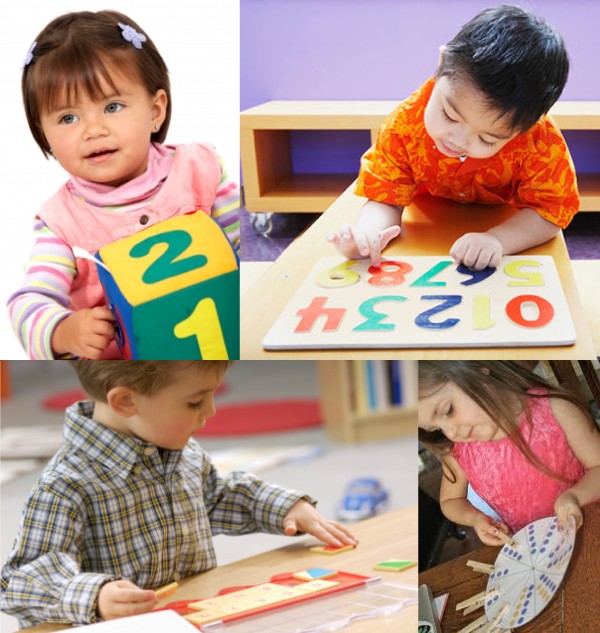
One weird trick

A story

A few days ago my 3rd grader and I were walking the dog when she spontaneously began to ask our dog multiplication questions: “Charlie, what is 9 x 5?” It wasn’t entirely clear to me what my role in her imaginative game was supposed to be. Did she want me to answer for him? Was she planning on answering in Charlie’s voice? So when she asked the question again, I stalled, and said, “If you’re going to ask Charlie math questions, you need to know the answer. Do you know what 9 x 5 is?”

“Forty-five,” she said quickly.

“Wow!” I said. “That was quick! How do you know that?”

“Because,” she responded, “if it was 10 groups of 5 it would be 50, so then I take away 5 and it’s 45.”

“That’s a great strategy,” I said. “Did you learn how to do that at school, or did you figure it out yourself?”

“I figured it out myself.”

What a great strategy!

Here’s another one, from several twists and turns later in the conversation. This one is for 5 x 4: “To do 5 groups of 4, I set one of the 4’s aside, and then I do 4 + 4, which is 8, and then 8 + 8, which is 16. And then I bring back the 4 I set aside and add that and it’s 20.”

Amazing!

One weird trick

Now, I have a theory about my daughter, and there’s no way to substantiate my theory, and I am completely aware that it’s the theory I want to be true, which is maybe why I believe it. But my theory is that my daughter’s current very positive relationship with mathematics (a very recent development) is almost entirely due to “one weird trick” that we’ve been using in our home since she and her older brother were very, very young.

This is not click-bait. I’ll tell you the trick. The trick is a question:

“How do you know that?”

If I could give parents exactly one piece of advice for helping their kids learn and love mathematics, it would be to ask that question, early and often, with genuine curiosity.

My 5th grader is great at memorization, has a natural curiosity about numbers and patterns, and learns quickly when it comes to mathematics. My 3rd grader, on the other hand, has a hard time even remembering what she went up the stairs to do, is curious about a great deal of things but not particularly curious about numbers or patterns, and does everything at her own pace, which is usually slower than the adults in her life are comfortable with. In a typical classroom, none of this bodes well for her math learning, and in fact up until this year she hasn’t really cared much for school math.

But she does enjoy doing math at home with me. When I asked her about this once, in second grade, she said that at home, I always ask her how she got her answer, and listen to her. At school there are just so many other kids in the class, and no one is asking her that. 1 My interpretation of that explanation was that at school, she feels like the math is being handed down to her, and she doesn’t always understand it. At home, she feels like her thinking is centered, and that she has interesting and important things to say.

I’d like to say that, as a math teacher with a particular interest in children’s mathematics, I spend a lot of time designing cool math activities and looking for math in the world around us, and yes, I have great ambitious to do just that. But mot of the time it’s a problem here or there, a conversation on a walk with the dog, a moment after dinner going over the worksheet her teacher sent home. It’s really not about the amazing math activities we do. It’s almost all about the question.

Why does it work?

Asking “How did you do that?” or “How did you know that?” is a simple switch, but it doesn’t mean it’s a natural one. As adults, our inclination when doing math with kids is to

  • validate correct answers and correct incorrect answers, and
  • teach correct solution methods.

Changing the response also changes the entire nature of the adult-child conversation. It puts the child’s thinking first instead of the adult’s, which is a much more effective way to build a child’s confidence, support their learning, and find joy in doing mathematics. Here are some ways I have seen this with my own 3rd grader:

  • Building Confidence. A. is not the fastest mathematician in her classroom, and she is very, very quiet in class. Recently I took my college students to her school to interview children about their math strategies. I requested that my daughter be one of the children, and her teacher looked hesitant and said, “But A. never talks.” Five minutes later, A, was sitting on the floor with two complete strangers, happily solving math problems and explaining her thinking before my students could even ask.
  • Supporting Learning. My daughter is resistant to being told what to do if she doesn’t already have buy-in. If I try to tell her, “here’s my way to solve this problem,” she generally doesn’t care, and it won’t stick. But if we begin with her thinking, she’s much more excited about learning. For example, when she shared with me how she solved 9 x 5, I asked if she could do the same thing for 9 x 6, and she wasn’t sure. It took more thinking and an incorrect answer along the way, but when she got there (“Oh, it’s 54!”), she was so delighted to realize that her strategy worked for any multiplication fact with 9s.
  • Finding Joy in Mathematics. More than anything, this is fun! Last year in 2nd grade A. was supposed to regularly compete problem set worksheets for addition and subtraction within 20 at home. Initially, I did not love the idea. It was just rote practice, week after week, with no variation in the types of problems. But here’s where the “one weird trick” description is, well, weirdly appropriate. Because asking, “How did you know that?” completely transformed what could have been mathematical drudgery into something delightful. I have so much more to say about this particular experience, and maybe someday I’ll write about it, but suffice it to say now that the thing I thought would be stressful or tedious for us became, at least most of the time, a joyful experience.

How to

It’s so easy! Just ask the question, and then be genuinely curious about what you’ll find out.2

Ask the question about interesting math problems. Ask the question about math problems that don’t seem all that interesting, and see if they become interesting.

Ask the question when your child gets a wrong answer. Maybe they’ll figure out the right answer as they respond, or maybe you’ll learn something about the right ways they’re thinking even if they didn’t get all the way there.

Ask the question if you know a lot about math. Ask the question if you don’t know much about math. Your kid knows things differently than you do, and you may be surprised how much they learn.

And ask the question early and often, because this one weird trick is not a quick trick. It’s a question that works well now, but gets better with time.

  1. This is not in any way a critique of her teachers. No matter how good they might be, no teacher in a class of 29 kids can give the kind of one-on-one attention a child is going to get in the home. Which is why this is a strategy I recommend especially for parents. ↩︎
  2. Or ask a variation on the question: “How did you figure that out?” “How did you get that one so fast?” “How did you think about that?” “How did you know that…?” “Why did you choose to do it that way?” ↩︎

Sharing Brownies

The other night at dinner as we all debriefed our days, I mentioned that I’d given my college students a problem about sharing brownies. “I should give the problem to you and see how you would solve it,” I mused to my kids, and my husband immediately said, “Let’s make brownies and solve the problem in real life!”

So we did. We threw together a pan of brownies from a mix we had sitting in our cupboard, and when they had cooled I cut and plated three square brownies for each kid. Then I handed them each a plate and a dinner knife and told them to figure out how to give every member of our 4-person family the same amount of brownie.

We like to ask sharing problems about food (“If there are 8 pancakes, how many can everyone have?”), because our kids, like all kids, are highly motivated by food and by fairness. But this is a challenging problem, without a clear, immediate solution.

Still, my kindergartener dove right in, deftly cutting all three brownies in half. She then paused for a moment with the two extra pieces before cutting them in half too and stacking a quarter brownie on top of each half-brownie portion. “Everyone gets a half and a piece,” she said when I asked her about her solution.

(Surprisingly, very few of my college-age students come up with this particular method initially, although once they have seen it they tend to prefer it. This semester one student commented on how surprised he was that a kindergartener would come up with this method right away when he, a math education major, didn’t think of it on his own.)

My 7-year-old stared and stared and stared at the brownies and I could see the gears turning in his head. Finally, several minutes after my daughter had confidently offered up her half and a piece, he said, “Okay, I think this will work,” and embarked upon a complicated cutting exercise that I would call “split the brownies into smaller and smaller pieces and hope it will all work out eventually.” First he cut one brownie into thirds, cut another brownie into fourths, cut a fourth in half, and put the half-quarter together with a full quarter to make another “third”. He then cut the last brownie into fourths, and proceeded to cut and re-cut any odd pieces out until he felt confident that he had a workable number of pieces.

He explained that everyone got a third and a quarter and a half quarter and a “small quarter” (half of half of a quarter). But when he actually distributed the pieces onto each of our plates, there were a few extra bits left behind. “Hmm, I don’t know if that really worked,” he said, and then shrugged and popped the extra pieces into his own mouth.

It was obviously interesting and fun to watch how my kids approached this problem on the very same day I watched my college students approach the same problem. But it was also interesting to listen to the informal language they used to talk about their solutions. They both already had some language for talking about fractions, and they both ran up against limits. The kindergartener could talk about halves, but once she got to quarters they became “pieces”. Nevertheless, with the motivation of actually getting to eat the brownies at the end, she was remarkably accurate at splitting the brownies into equal parts. The second grader could talk about halves and thirds and quarters, but then began talking about half-quarters and “smaller quarters” when he got down to eighths and sixteenths. And he made an interesting approximation of 1/3 by combining 1/8 and 1/4. This was not precisely equal to 1/3, but it was certainly close enough to feel fair.

My college students like to ask me questions like: “When would you start teaching this to students?” My answer is often: “Much earlier than you’d think!” When can kids start understanding fractions? Much earlier than you’d think! When can kids begin making sense of probability? Much earlier than you’d think! When can you give kids multiplication problems? Much earlier than you’d think! When can kids understand that a square is a type of rectangle? Much earlier than you’d think!

This particular problem involves both division and fractions, and while I had no idea what my 5- and 7-year-old children would do with it, I knew they would be able to do something. Kids have great ideas, and they have great ideas much earlier than you’d think!

About this Blog

I knew I loved to write long before I knew I loved mathematics. As a child I was a voracious reader, and dreamed of creating the same magic with my own pen.

Instead I became a math teacher.

I kept up a personal blog on the side, and my writing background served me well when I decided to earn a masters degree in math education, and then doctorate. Then followed a new career, and marriage, and a baby, and in the last few years my writing has mostly fallen to the wayside. Still, in the back of my mind I had a feeling that writing could still fit in my life, that there was some way I could merge my professional passions and my personal life in a way that would be useful and interesting to a wider audience than just my friends and family.

One night, when our son was still very young, I shared some of my thoughts about mathematics and parenting with my husband, Brian. I felt it was important for our son to get positive messages about mathematics from both of his parents, and for both of us to engage with him in mathematical thinking.

Brian, a trained opera singer who hadn’t taken a formal math class since his first semester of college, agreed that this was important, but expressed some concern. “What would talking mathematics with Monkey even look like?” he asked me. “I don’t think I would know where to begin.” Honestly, I didn’t have a good answer. Talking math felt intuitive to me, but that was because I was totally immersed in the world of mathematics learning. My husband, like so many other parents, is not.

Not long after that conversation I had a chance to give a 20-minute presentation to a group of mothers of young children. I focused my presentation on mathematical literacy for toddler-aged children, and when I rehearsed the Power Point with my husband he said, “That. That’s exactly what I was looking for.” The presentation was very well received. Several mothers told me that they very much wanted their children to have a good experience with mathematics, maybe a better one than they themselves had, but they knew very little about what they could do as parents, and that my presentation had given them a way to think about it. They felt excited to begin talking math with their kids.

That was the moment this blog was born.

There are many, many early literacy resources for parents. We know to talk to our children from the moment they are born, and to read to them. In fact, giving your children a strong foundation in literacy is one of the best things you can do to provide them with a strong foundation for mathematics. But some very literate adults can nevertheless remember struggling with mathematics, and I have found that many parents are looking for more. They want to actively help their children to feel excited about mathematics, and able, and empowered. These parents also want to feel empowered themselves when it comes to helping their children learn, understand, and enjoy mathematics. I created The Kids’ Quadrant to be a resource for these parents. For you!

The Kids’ Quadrant lies exactly at the intersection of my personal and professional life. I have a PhD in math education and a familiarity with and access to research on teaching mathematics to children. I teach, coordinate, and write curriculum for mathematics classes for future elementary teachers, which means I spend my career working to impress hearts and minds with an understanding of how children learn, perceive, and sometimes struggle with mathematics. And with my one-year-old son now at the cusp of language, I am deeply, personally invested in creating a natural and positive environment for him to explore the world of numbers and shapes and patterns.

I have much to share and much to learn, and this blog is my journey as well.

toddlers doing math